
The Human Side of the Move: Lessons from ATMA Malaysia
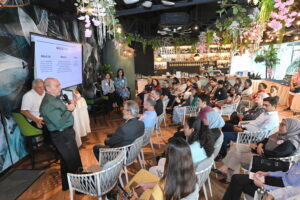
Perhaps the most valuable conversations in global mobility are about the things that are hardest to put into a policy. That idea came through clearly at the inaugural ATMA Malaysia Global Mobility Forum in Kuala Lumpur, where mobility leaders gathered to explore what successful international assignments require now—and what the region’s next chapter of thought leadership could look like.
The policy is only the beginning.
Cross-cultural specialist and GM Leader, Marie Tseng, opened the forum with “Beyond the Move: The Human Side of Global Mobility,” a timely reminder that behavior cannot be separated from context. What feels unfamiliar—or even inappropriate—may make perfect sense once the values, customs, and circumstances behind it are understood. For mobility teams, that insight has practical weight. Local expertise is not simply knowing where to live, how to open a bank account, or what to expect from a tenancy. It is helping people understand why things work differently and giving them the confidence to navigate those differences.
One employee. One whole household.
The panel on creating successful international assignments (moderated by Ella Onn, featuring panelists Avrom Goldberg, Laurelle Sebastian, and John Preston) brought the family experience into sharper focus. The data tells a compelling story: 46% of employers reported higher relocation declinations in 2025, with family issues remaining the leading reason employees turn down opportunities. Another 40% cited spouse or partner reluctance as a key mobility challenge. But the discussion brought context to those numbers. One attendee reflected on challenges during their own relocation and how the absence of meaningful spousal support affected their family for years. The right support, they said, would have made an incredible difference.
Flexibility without the free-for-all.
Employee expectations are rising, while organizations are under pressure to control costs. Research shared at the forum showed that 56% of companies cite cost reduction and greater flexibility as drivers of policy change, while 89% identify employee experience as a top mobility priority. The answer is thoughtful design (as opposed to unlimited choice): standardize core benefits, personalize how they are delivered, and create timely touchpoints that surface concerns before they become exceptions. For clients, that can mean stronger governance, better benefit utilization, and an experience that still feels personal.
High tech still needs high touch.
John Preston’s (Group CEO, DSP Relocations Asia) discussion of the changing role of destination service providers captured another important shift: from transactional task execution to end-to-end experience management. Technology can provide real-time updates, visibility, and efficiency, but it cannot replace judgment, empathy, cultural fluency, or trust. The most valuable providers will use digital tools to eliminate friction while keeping human expertise close at hand—anticipating needs, adapting communication across cultures and generations, and supporting the whole family throughout the journey.
One audience question brought the tension into focus: how can mobility teams make the case for family support, cross-cultural training, and related benefits when cost control dominates the conversation? The discussion pointed to a growing body of research that gives both corporate mobility leaders and service providers a stronger story to tell. These so-called “soft” services have hard consequences. When they are overlooked, assignment success can suffer—and company costs can rise. Learning to use that data effectively will be critical to securing support for the programs that help employees and families thrive.
Thought leadership gets closer to home.
The forum also showed how thought leadership in Asia is evolving. Rather than importing a one-size-fits-all view of mobility, ATMA is creating space for the distinct cultures, markets, and talent realities of the region to shape the conversation. Its pillars—advocacy, education, ESG and sustainability, and industry connection—reflect the breadth of what modern mobility professionals must embrace.
Just as importantly, the event reinforced that organizations across the ecosystem are collaborators. Sustainability, technology, employee experience, and cost are shared challenges, and progress will come faster when insights are exchanged across employers, providers, and local experts.
The takeaway: Design for real life!
The strongest mobility programs will be rigorous without becoming rigid, technology-enabled without feeling impersonal, and globally consistent without losing local nuance. They will recognize that an assignment succeeds not when a checklist is complete, but when an employee and all members of the family can build a life, contribute with confidence, and feel supported along the way. That is the human side of mobility—and, increasingly, the side that delivers the greatest business value.
Ready to dig deeper?

 Innovation at the Speed of Mobility: What’s New in Weichert Go
  India Mobility Isn’t Underfunded – It’s Under-Differentiated
  The Human Side of the Move: Lessons from ATMA Malaysia
  A Major Mobility Change Without a Major Drain on Your Team